Description
(Japan, Yamagata, ABV15%, RPR: 55%, Gohyakumangoku rice)
Elegant and floral, with scents of white flower, citrus, cherry, peach and a hint of pine nut. Spicy on the mid-palate and full-bodied, it has a short, clean finish.
Producer Profile
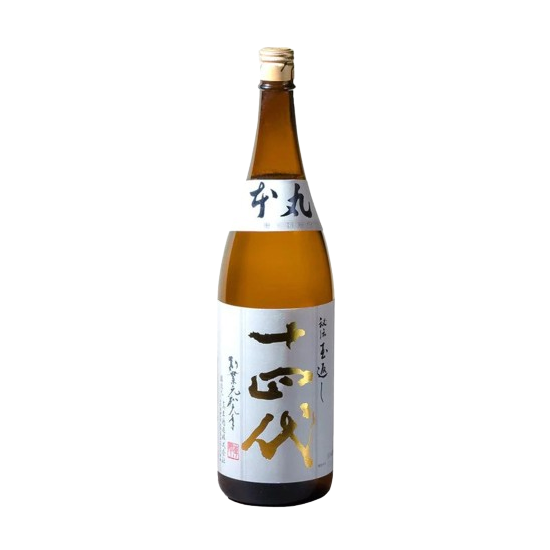
The Juyondai Tatsuno-Otoshigo Nakatori Jomorohaku Junmai Daiginjo is a pinnacle expression of the “modern classic” style that saved the sake industry in the 1990s.
Produced by the legendary Takagi Shuzo, this specific bottling is renowned for using a proprietary rice variety and a meticulous pressing method that yields unparalleled purity.
Founded in 1615 in Murayama City, Yamagata Prefecture, Takagi Shuzo is arguably the most influential sake brewery in the world today.
- The Visionary: In 1993, 15th-generation brewer Akitsuna Takagi took over the brewery at just 21. At a time when the market favored “Tanrei Karakuchi” (light and dry) sake, Takagi-san pioneered a bold, fruit-forward, and aromatic style under the Juyondai (literally “14th Generation”) label.
- Cult Status: Juyondai is often called “Phantom Sake” due to its extreme scarcity. It consistently ranks #1 on Saketime (Japan’s premier review site) and is sought after globally by top-tier sommeliers and collectors.
- Proprietary Innovation: Unlike most breweries that use common rice like Yamada Nishiki, Takagi Shuzo spent 18 years developing its own signature rice varieties tailored to Yamagata’s cold, snowy climate.
Decoding the Label
The lengthy name of this sake describes a very specific technical process:
- Tatsuno-Otoshigo: Translated as “Dragon’s Spawn” or “Seahorse,” this is an in-house rice variety developed by the brewery. It is a cross between Yamashu No. 4 and Miyamanishiki. It is known for producing sake with a compact starch core, resulting in a cleaner, more aromatic profile.
- Nakator: This refers to the “middle cut” of the pressing process. During filtration, the first liquid (Arabashiri) is often too thin, and the final liquid (Seme) can be too bitter. The Nakatori is the center portion—the heart of the run—prized for its perfect balance of aroma, clarity, and elegance.
- Jomorohaku: A historical term indicating that both the Koji rice (mold-inoculated rice) and the Kake-mai (main fermentation rice) are highly polished. It signifies a “white-on-white” purity that was a luxury in the pre-industrial era.