Description
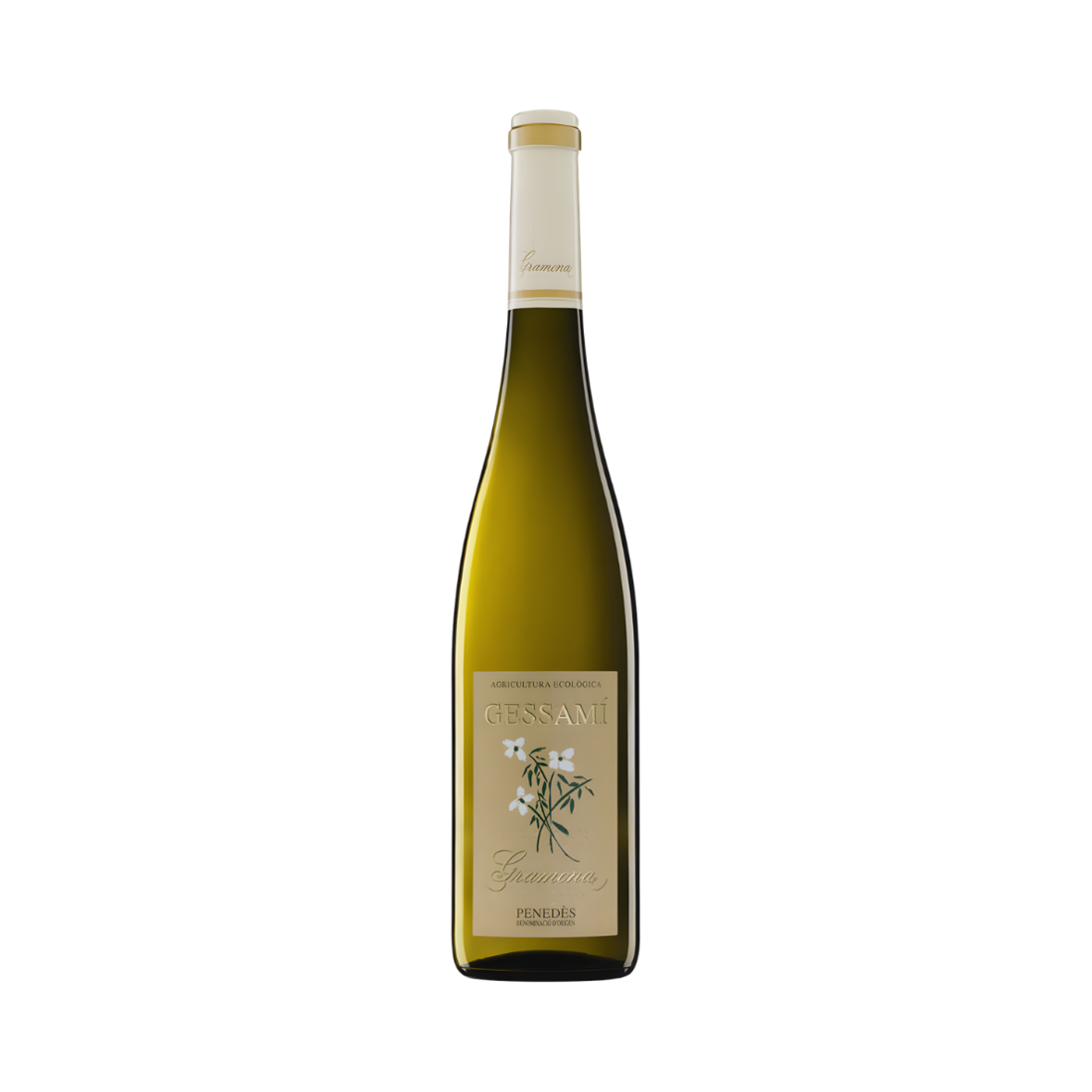
The 2024 Gramona Gessamí is a celebrated aromatic white from one of Spain’s most prestigious estates. Named after the Catalan word for Jasmine, this wine is designed to capture the essence of a Mediterranean spring.
While Gramona is globally famous for its long-aged sparkling wines, Gessamí has a “cult following” as one of the most fragrant and elegant still whites in the Penedès region.
The Craft: An Aromatic Explosion
Gessamí is a unique “cross-border” blend, combining Mediterranean Muscat with aromatic varieties more common in cooler northern climates.
The 2024 Blend: Typically a harmonious mix of 50% Muscat (a combination of Muscat de Frontignan and Muscat of Alexandria), 35% Sauvignon Blanc, and 15% Gewürztraminer.
Precision Harvesting: To maintain its “electric” freshness, the grapes are harvested early. Each variety is fermented separately in stainless steel at very low temperatures (13–15°C) to preserve the delicate floral thiols.
Natural Sweetness: The fermentation is stopped using cold stabilization to leave approximately 6 g/L of residual sugar, which provides a silky mouthfeel without making the wine taste overtly sweet.
The Appearance: Brilliant pale yellow with youthful greenish highlights.
The Nose: An “intense garden in bloom.” It leads with powerful aromas of jasmine, orange blossom, and rose petals, followed by fresh notes of apricot, lime zest, and white peach.
The Palate: Silky and light-bodied. Despite its aromatic intensity, it is remarkably fresh. The entry is gentle and “creamy,” balanced by a vibrant, racy acidity that prevents the floral notes from feeling heavy.
The Finish: Long and clean, leaving a refreshing “breeze” of citrus and mineral notes.
Producer Profile
Gramona is a cornerstone of Spanish winemaking, a family-owned estate in Sant Sadurní d’Anoia that has evolved from a traditional Cava producer into a global icon of biodynamic viticulture and long-aged sparkling wine.
With a history spanning six generations, Gramona is the leading specialist in “Artisans of Time.”
The Lineage: From the 19th Century to the 6th Generation
The estate’s roots are a merging of two storied Catalan families: the Batlles (growers and winemakers since 1816) and the Gramonas (founded by Bartolomé Gramona in the late 19th century).
- The Founders: In 1921, Pilar Batlle and Bartolomé Gramona began producing “Cava Champagne.”
- The 5th Generation: Until recently, the winery was led by cousins Jaume Gramona (the technical visionary and enologist) and Xavier Gramona (the commercial soul and management lead until his passing in 2023). Together, they transitioned the estate to biodynamics and led the high-profile exit from the Cava DO.
- The 6th Generation: Today, Leo Gramona (management/commercial) and Roc Gramona (viticulture/enology) are steering the estate into the future. Roc is also a renowned expert in “respectful pruning,” a technique used to extend the life and health of old vines.
The Corpinnat Revolution
In 2019, Gramona made international headlines by withdrawing from the Cava DO to become a founding member of Corpinnat. This collective brand was created to distinguish Penedès producers who adhere to the highest quality standards in Europe:
- 100% Organic & Hand-Harvested: All grapes must be certified organic and picked by hand.
- Estate-Vinified: All wines must be produced on the winery’s own premises.
- Indigenous Varieties: A minimum of 90% of the grapes must be native varieties (primarily Xarel·lo).
- Long Aging: The minimum aging on lees is 18 months, though Gramona’s entry-level Imperial is aged for over 50 months, and their Enoteca can exceed 15 years.
The Biodynamic Heart
Under Jaume Gramona’s leadership, the estate underwent a radical shift to biodynamics after he realized the soils were losing their “vitality.”
- The Farm: Gramona operates a fully integrated biodynamic farm with cows, sheep, and horses. These animals provide the manure for the “Preparations 500 and 501” used to treat the soil.
- Aliances per la Terra: In 2015, Gramona founded this association to encourage their neighbors and grape suppliers to convert to biodynamics, ensuring the entire surrounding ecosystem is protected.
- Terroir-Based Viticulture: They employ high-tech soil mapping and microbiologists (like Claude Bourguignon) to understand the “invisible life” of their limestone and clay soils.